Learning Scientist · Founder, Expert IEP
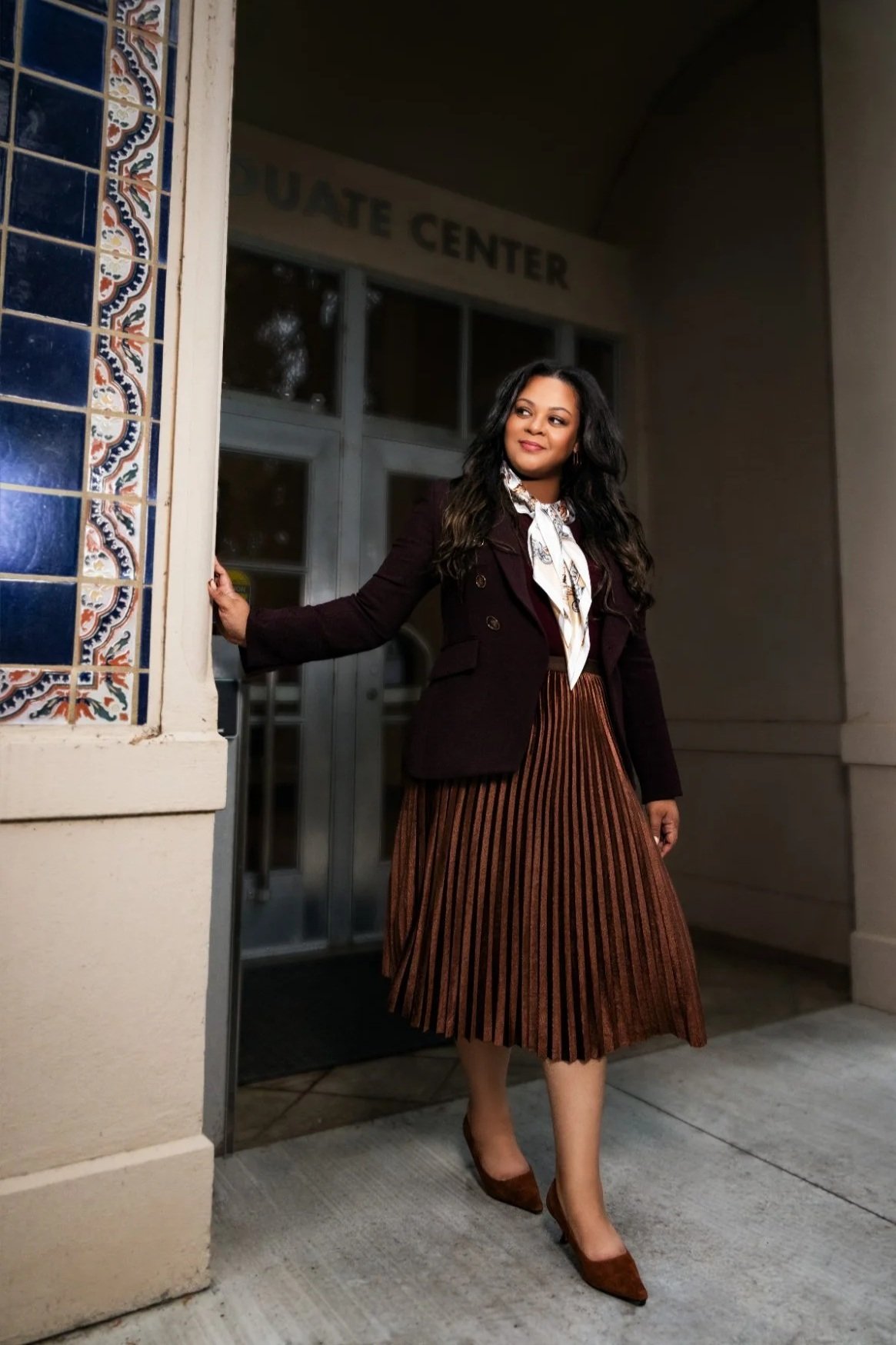
I study what happens to family knowledge when it enters institutional systems.
My research examines how language, documentation, and technology shape whether what families know is simply expressed, meaningfully represented, given decision-making standing, and ultimately able to shape action.
PhD Candidate in Education (Learning & Mind Sciences), UC Davis · Expected 2027
Designated Emphasis in Computational Social Science
PhD Candidate in Education, UC Davis · expected 2027
〰️
4,800+ families served through Expert IEP
〰️
Ford Foundation Predoctoral Fellow · Echoing Green Fellow · Black Ambition Grand Prize
〰️
$1.6M+ Grants, Prizes & Venture Funding
〰️
Spoken at the United Nations, White House & Harvard
〰️
PhD Candidate in Education, UC Davis · expected 2027 〰️ 4,800+ families served through Expert IEP 〰️ Ford Foundation Predoctoral Fellow · Echoing Green Fellow · Black Ambition Grand Prize 〰️ $1.6M+ Grants, Prizes & Venture Funding 〰️ Spoken at the United Nations, White House & Harvard 〰️
Research
Knowledge Entry, Family Mattering, and institutional language, using computational and qualitative methods.
Research to Practice
How Knowledge Entry and Family Mattering inform the design of Expert IEP with families and family-serving organizations.
Design Notes
Essays on systems, cognition, and what AI carries — the public side of the research.
My daughter was diagnosed with severe autism. Doctors said she would never develop full communication or autonomy. Today she is studying engineering in college. I knew things about her that never made it into her record, and I became a scientist to find out why. Everything I have learned since has confirmed what I knew then: the mind was never the problem. The system was.
- Antoinette Banks, author of Better Than a Diagnosis (2019)

Built with 4,800 families, not just for them.
Expert IEP is a family-centered AI platform, co-designed with families across 77 iterations. It reads a child's IEP, surfaces what is vague, missing, or written around the family rather than for them, and returns a clearer plan before the meeting. The company came before the dissertation. Now the two inform each other: what families do with the platform shapes the questions the research asks, and what the research finds changes what the platform looks for. It is where Knowledge Entry stops being a construct and becomes something families use.
